Bridging Cultures: Appreciating Indigenous Fashion
Indigenous designers face the challenge of breaking stereotypes while creating fashion transcending cultural boundaries.
By: Aliya Karimjee and Manroop Aulakh
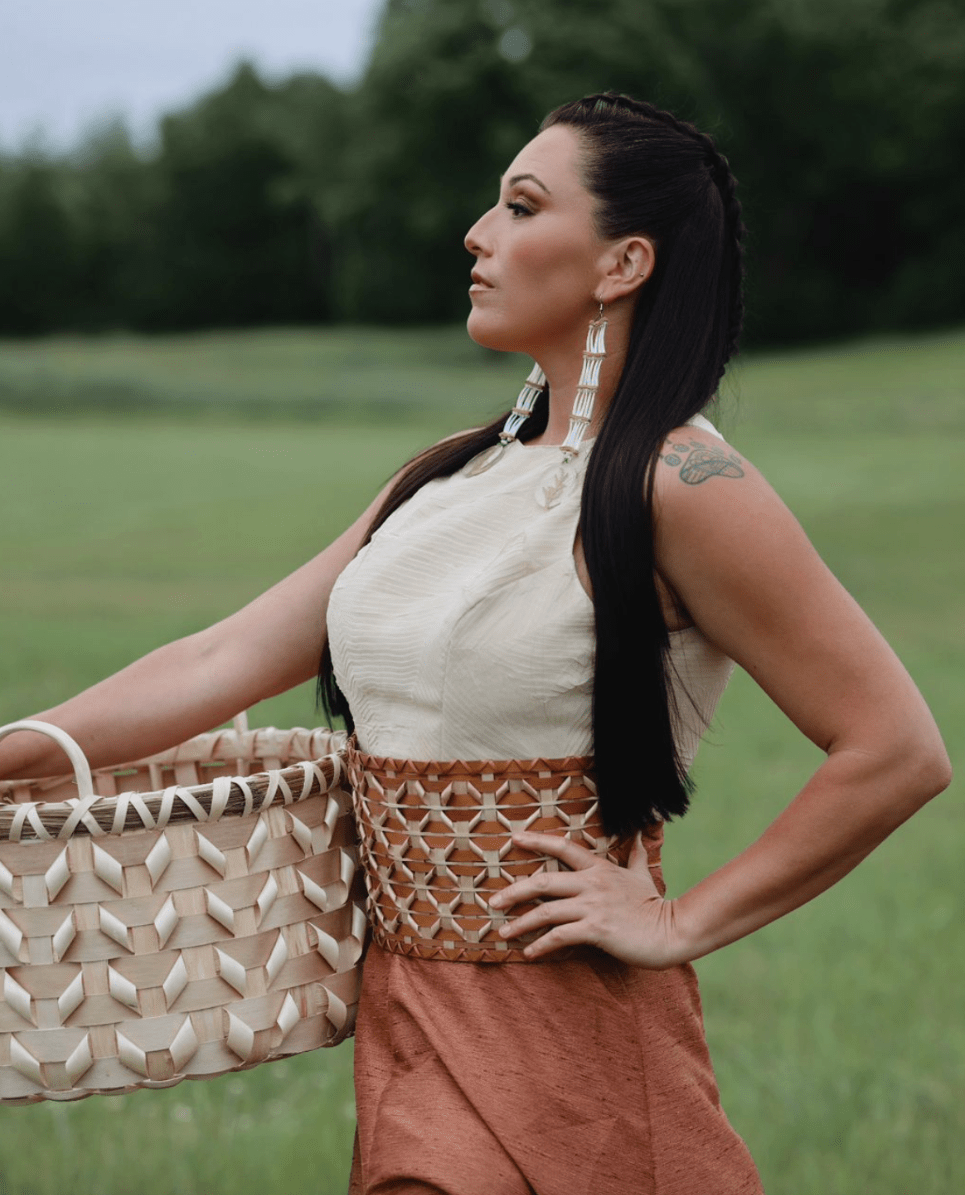
(Courtesy of Stacey Mitchell on Instagram)
Once dismissed as “Halloween costumes,” cultural outfits are now celebrated for their true significance. It’s time to get educated and appreciate the rich heritage behind Indigenous fashion.
Traditional clothing, accessories, and artifacts hold deep cultural and often sacred significance in Indigenous cultures. They are worn during ceremonies like powwows, celebrations, and pan-national gatherings. Incorrectly labeled as “costumes” in some outdated references, this living art incorporates rich materials such as cedar, beads, ribbons, etc., and precious metals like silver, brass, and copper, according to The Canadian Encyclopedia.
“My Culture is Not a Costume,” says Tansi Nîtôtemtik, an Indigenous blogger on the University of Alberta’s Reconcili-ACTION YEG blog. Not only are the costumes inaccurate, but they are also offensive.
The Government of Canada estimates that over 630 Indigenous communities are in the country. Therefore, the misconception that “all [Indigenous Peoples] look the same” is false, as one costume could not begin to encapsulate so much diversity. Similarly, the sale of these costumes, specifically those with axes and spears, reinforces the violent stereotype that Indigenous Peoples are ‘savage.’
CBC voices the community’s public outrage and criticizes Spirit Halloween for the sale of sexualized, culturally insensitive costumes. Lori Brave Rock, an Indigenous person from the Blood Reserve in Alberta, told CBC a significant point.
“It’s not like we can walk in there and buy a white person costume, I don’t know how this is okay in 2018 to put on a costume and go out pretending you’re somebody else’s culture.”
Sadly, the issue remains six years after this article’s publication. However, is it worse that Spirit Halloween is selling them or that there’s a market for them to be sold?
Indigenous fashion has a complex history, shaped by both appropriation and resilience. In the past, mainstream fashion misappropriated elements and symbols of Indigenous clothing, reducing sacred designs and patterns to mere aesthetics.
Designers DSquared2 stated that their 2015-16 collection drew partial inspiration from “Canadian Indian tribes” and included a handbag captioned “Twin Peaks goes eskimeaks” on the brand’s Instagram feed. According to CBC, “Eski” is derived from the term “Eskimo,” an offensive term historically used to describe the Inuit.
Today, the fashion industry focuses on rewriting the narrative to appreciate Indigenous culture. Mohawk designer Stacey Mitchell shares the struggle to find everyday wear Indigenous fashion, so she aims to offer people the opportunity to “represent who they are, wherever they are.”
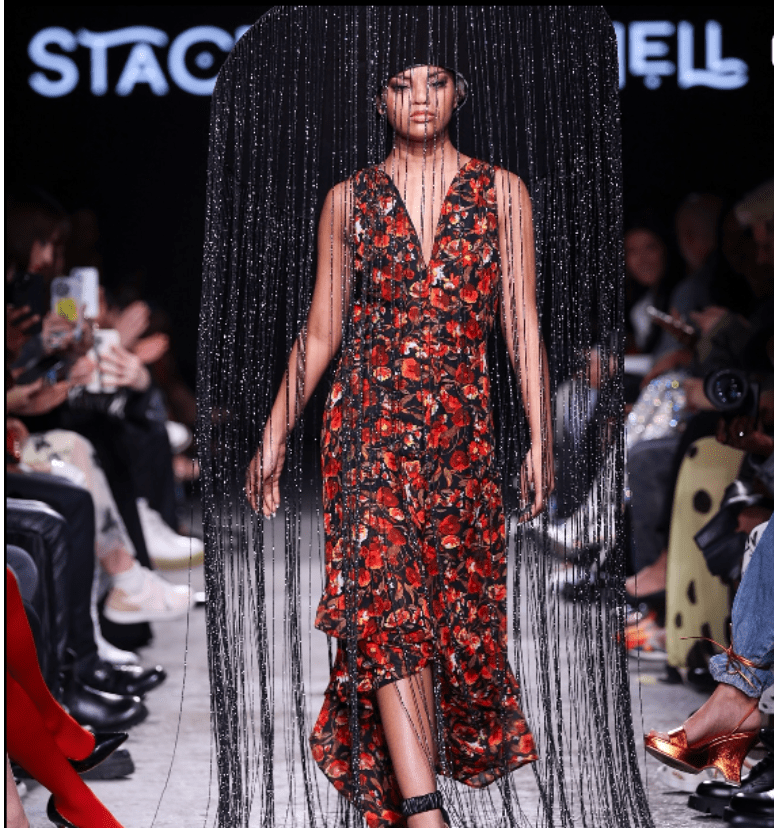
Model Sienna Leah walks the Fashion Art Toronto runway with a beaded statement hat.
As society recognizes right from wrong in cultural clothing, Mitchell states that some fashion brands don’t always have Indigenous Peoples as their advisors, which can lead to problematic decisions.
“Indigenous designers are now being ‘discovered’ even though we’ve been creating fashion for centuries,” she says. We need to be in these spaces, being treated with respect as equals, before significant and appropriate changes are made,” she added.
On the other hand, this fear of culturally appropriating can sometimes be counter-effective in supporting local. So how does one educate themselves before wearing an Indigenous design?
Evan Lepp, a third-year social work student at Toronto Metropolitan University, wishes to provide a culturally safe practice in the context of a historical and current colonial career on Turtle Island.
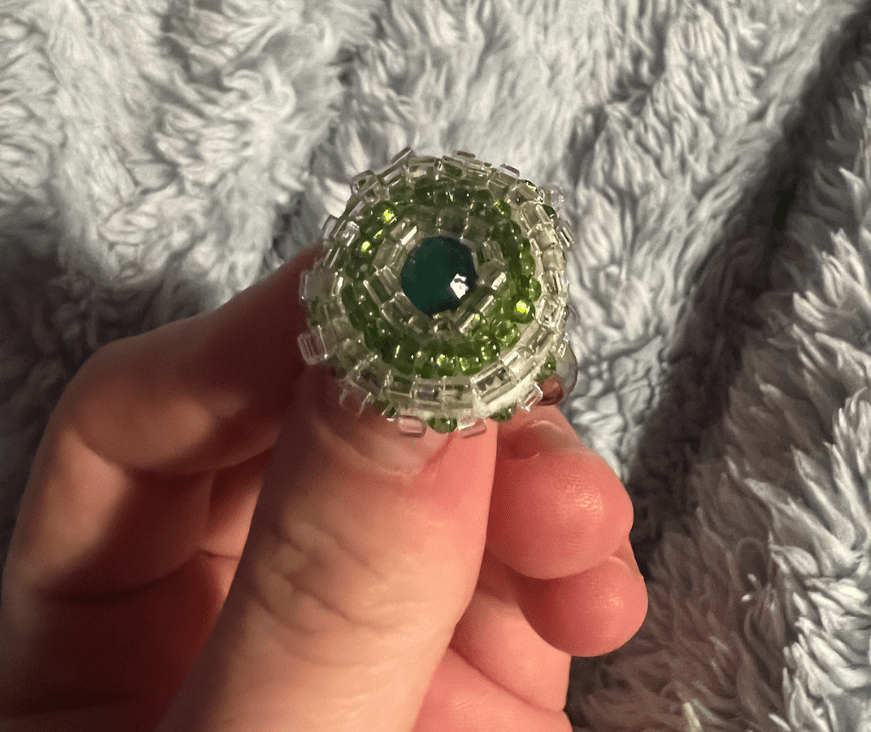
Maya, the Indigenous owner of Lady of the Moon Creations, gifted him a ring (Courtesy of Evan Lepp.)
After receiving this gift, he took the time to educate himself online, in his courses, and from Maya about the cultural relevance of beading. “I feel that educating yourself is important for people living in Canada because knowledge helps us not reproduce harm and do our best to honour the knowledge of people whose land we are on. For me, supporting local Indigenous business owners is part of that education and support,” says Lepp.
 Spill The Trend
Leave a comment